Saturday, November 29, 2008

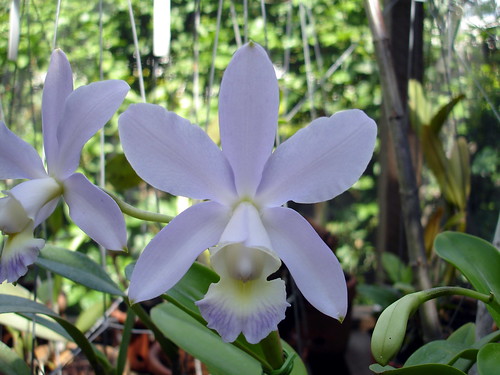
Cattleya dolosa


This species is also known as the Dolose Cattleya and is native to Brazil. Cattleya dolosa grows on rock outcroppings or sometimes trees.

The plant is very similar to Cattleya walkeriana. The fragrant flower of Cattleya dolosa is similar in size and form to Cattleya walkeriana. Each 3 inch flower stem has between one to (rarely) four, 5 inch flowers that are very waxy and have a heavy substance. Flowers are long-lived. Blooms in spring.

Cattleya dolosa is frequently grown mounted on cork slabs or in baskets, but some growers report success using pots with extremely open fast draining medium such as coarse bark nuggets.

It was once thought that Cattleya dolosa was a natural hybrid between Cattleya walkeriana and Cattleya harrisoniana or Cattleya loddigesii. However, after years of hybridizing, Cattleya dolosa was not able to be reproduced through experimentation and was awarded species status. It is rare in cultivation but worthy of a spot in your collection.

Wednesday, November 26, 2008

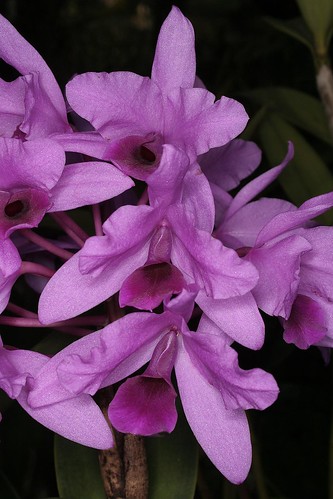
Cattleya deckeri


This species is also known as Decker's Cattleya and was named in honor of a German botanist who lived during the 1800s.

It is native to Panama and Trinidad. Cattleya deckeri is found growing in low hills to sea level and it is found growing on tree trunks that overhang rivers or in bushes or rocks.

The flowers of Cattleya deckeri are rosy purple with a darker lip. There are yellow markings in the throat. The flower is very similar to Cattleya skinneri. Flowers are 3 1/2 inches (8.75 cm) wide and bloom in the fall.

Cattleya deckeri is the only species in the genus found in both Central and South America. This species is often confused with Cattleya skinneri, but it grows in a different geographic location and blooms during the fall rather than the spring. It is medium in size and bifoliate.

Provide warm, humid growing conditions with bright to moderate light. Grows well in pots or mounted on cork bark.

Monday, November 24, 2008

Cattleya bowringiana


This species is also know as Bowring's Cattleya and was named after an English orchid grower who lived in the late 1800s.

It is native to Belize and Guatemala. Cattleya bowringiana prefers to grow on exposed rocks near free-flowing streams. They can be found near cliffs between 200 and 900 meters. Atmospheric humidity is high at all times. It may grow as a lithophyte in rocky ravines, with the plants splayed out on rocks with little shade. Interestingly, Cattleya bowringiana has occasionally been found growing as a terrestrial on quartz sand along rapidly flowing streams in addition to its more traditional habitat of large tropical trees.

Cattleya bowringiana has bold, club-shaped pseudobulbs, that can reach 10 to 15 inches in height, and are topped with two (sometimes three) leaves. The leaves are thick and leathery. Well-grown plants can reach 20 to 30 inches and produce up to 25 flowers per flower spike. Flowers are 3 inches (7.5 cm). The flower spike emerges from short-lived spates and grows to 10 inches (25 cm) before the flowers open. Flowers grow in clusters from a few (5 to 10) to a maximum of 15 to 25. Blooms in the fall and winter.

Grow in cool or warm Cattleya growing conditions. Cattleya bowringiana is easy to grow. As one reviewer put it, "There is no special treatment for these plants; they just grow". The plant sends out new growths in late May or June that will mature by late summer and will flower without a rest period in late September and October (in the United States). Provide lots of water when actively growing.

Saturday, November 22, 2008

Cattleya bicolor


This species is also know as the Bicolored Cattleya orchid.

Like many other Cattleya species, this one is native to Brazil. Cattleya bicolor is found growing in the Brazilian states of Distrito Federal, Goias, Minas Gerais, Rio de Janeiro and Sao Paulo.

Plants are medium to large in size. Cattleya bicolor has long, ribbed, cylindrical pseudobulbs that are topped with two oblong leaves. This species can grow to be a large robust plant. The larger the plant, the more flowers will be produced per spike.

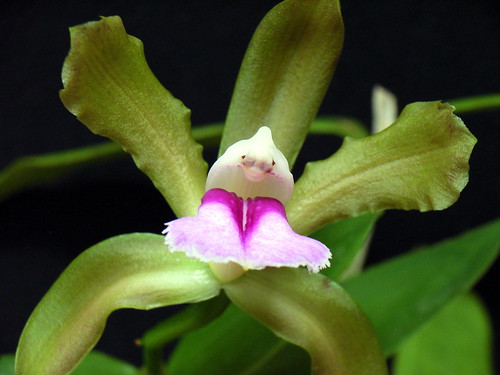
Flowers grow to 4 inches and very fragrant. The petals and sepals of Cattleya bicolor are a mahogany-brown with purple overtones. The lip is rosy pink or magenta. Flower color can vary considerably between individuals. Sometimes the petals and sepals are olive-green in color. Flowers are long-lived and of heavy substance. The flower spike emerges from a healthy basal sheath and has between one and seven flowers beautifully displayed. Blooms from fall to spring.

Cool to warm growing conditions are acceptable. Cattleya bicolor needs a large well drained pot or basket, good ventilation and sunlight. The potting media should be open, apply adequate water and fertilizer when growing. Reduce watering when the plant rests after flowering.

For more information:
Cattleya Orchid Source
Cattleya Source Wiki

Thursday, November 20, 2008

Cattleya aurea - Golden Cattleya Orchid


Cattleya aurea is native to Columbia. It grows on trees between 300 and 1000 meters in elevation.

The plant resembles Cattleya labiata or any other typical unifoliate Cattleya orchid species. The upright pseudobulbs of Cattleya aurea have one green leaf.

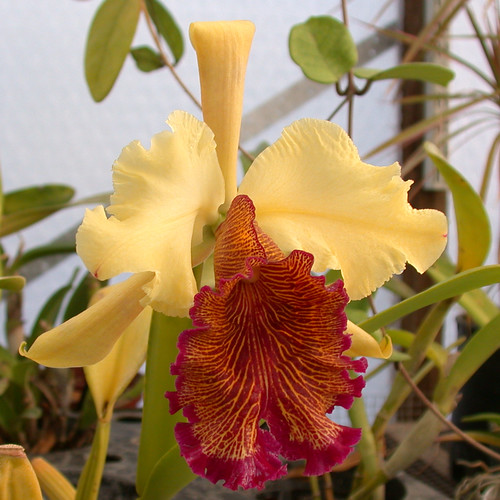
A well grown Cattleya aurea plant can produce up to 5 or 6 large flowers per growth. The flowers are large, well-formed and have an impressively marked broad lip. The flower petal color is usually yellow (compared to Cattleya dowiana's olive). Flowers are fragrant but short-lived. Blooms in spring.

Cattleya aurea is very similar to Cattleya dowiana but comes from a different part of the world and blooms a few months later. This species is highly endangered in its home country due to habitat destruction and should not be purchased as a jungle-collected plant.

Cattleya aurea grows well under typical Cattleya conditions and light. Some growers have reported difficulty keeping the plants growing for more than a few years. Perhaps as more seed-grown plants from greenhouses enter the trade the problem will lessen.

For More Information:

Sunday, November 16, 2008

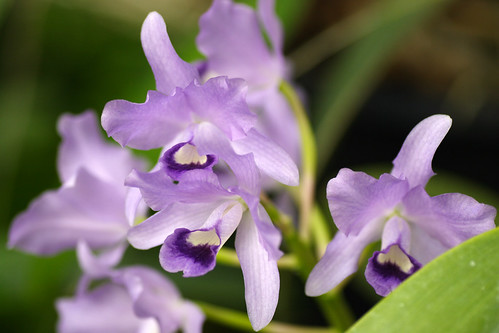
Cattleya amethystoglossa


Cattleya amethystoglossa is also known as the Amethyst Cattleya.

Cattleya amethystoglossa grows in a warm, humid environment near sea-level in the State of Bahia near the Atlantic coast of Brazil. Its roots cling to palm tree trunks, rock formations or the highest branches of very tall trees where there are high light levels and good air circulation. The native habitat of this formerly widespread species is rapidly disappearing because the areas are being converted to agriculture and the coastal and drier interior forests are being cut down.

Cattleya amethystoglossa
is one of the tallest Cattleya orchid species and is the most robust of all bifoliate Cattleyas.

Flowers grow to 4 inches (10 cm) and are fragrant. The petals and sepals are light lavender to pale rose with mauve or magenta spots. The amount of spotting varies widely between individuals.

Give Cattleya amethystoglossa a warm spot in the greenhouse and water and feed heavily during active growth. Reduce watering when the pseudobulbs mature and let the plant get a rest. Provide bright light for best flowering.

For more information:
Cattleya Orchid Source
Cattleya Source Wiki

Saturday, November 15, 2008

Growing Cattleya Orchids Outdoors in Houston, Texas

I found this blog post about growing Cattleya orchids outdoors in Houston, Texas.  The author was able to get them through a winter outdoors with just a little winter protection.  Its worth a read.